Carbon reporting for events and venues
Clients and tenders now ask what an event emitted. ESGen's Events workspace records venue energy, travel, catering, freight and waste for each event, with the evidence and the conversion factor behind every line.
An event lasts a few days. The footprint question comes long after.
By the time a client asks, the site has cleared and the suppliers have moved on. Much of an event's footprint is decided during planning, so that is where the measuring starts.
Travel is often the largest line
It sits with hundreds of guests rather than one supplier. Registration data gives a first estimate, and a short survey can refine the long-distance trips.
The venue's meter is not yours
Venue bills cover the building's year. Energy for your event days has to be attributed from a sub-meter, the venue's own figures or the floor area you used.
Suppliers appear once
Caterers, freight and hire firms work one event and move on. Unless their figures are collected during planning, they are hard to recover later.
Clients write it into the brief
Central government contracts give social value, including environmental outcomes, at least 10% of the score, and contracts above £5 million a year ask for a Carbon Reduction Plan.
Source: PPN 002 and PPN 006, GOV.UK
One workspace for every event you run
Set up your venues once, record each event as it is planned and delivered, and report from the same figures.
Set up each venue once
Save each venue with its type, floor area and capacity. Attach it to an event and the footprint uses that venue's real floor area for per-square-metre figures.
Venues
3 saved venues
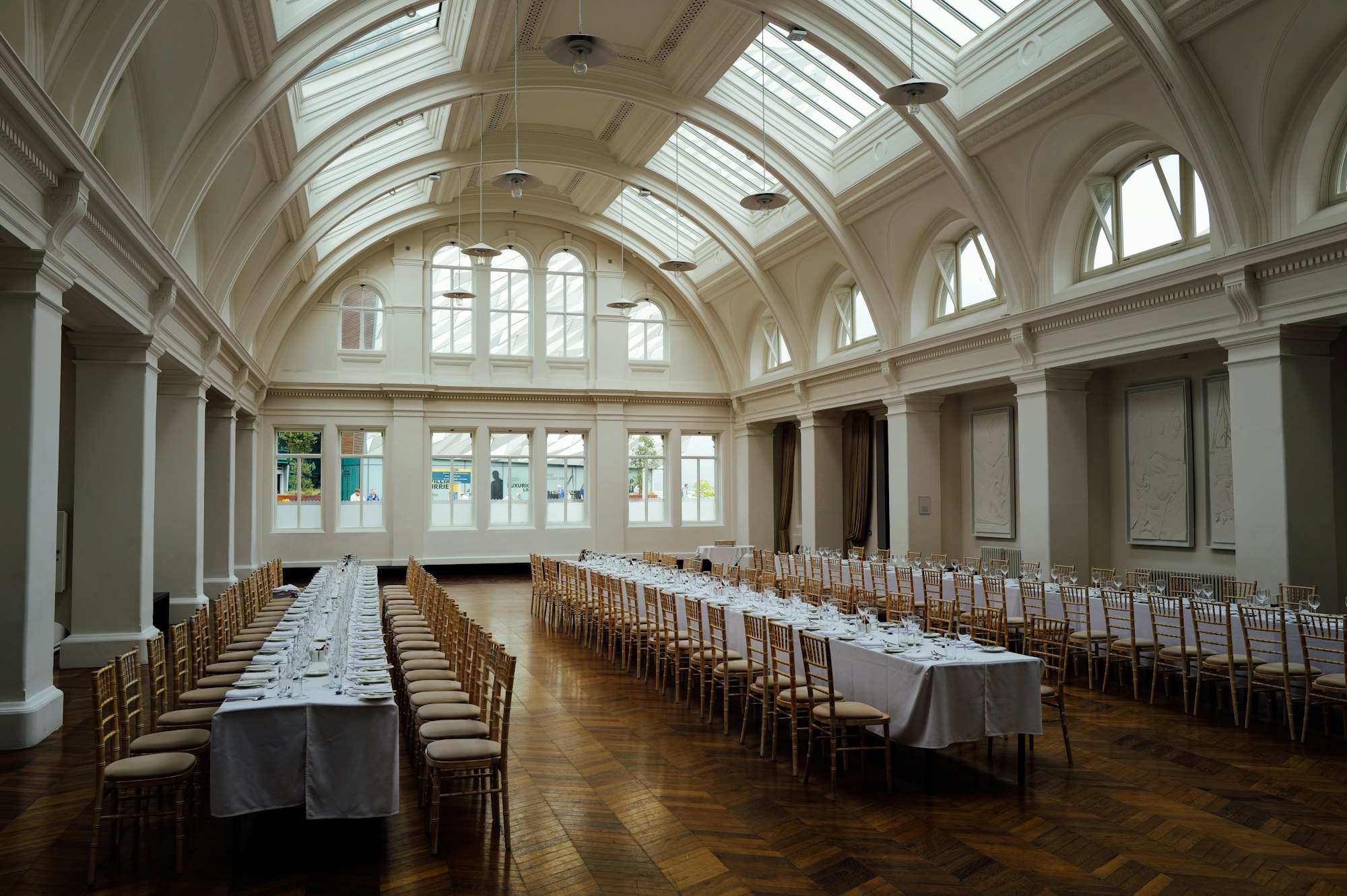
- Main hallIndoor venue, 2,500 sq mHolds 1,200
- Conference suiteHotel or convention centre, 640 sq mHolds 300
- Outdoor groundTemporary site, generator powerHolds 5,000
Autumn conference
2 days, 600 guests
- Venue attachedMain hall, 2,500 sq m
- Venue energy methodSub-meter reading for event days
Every line of an event footprint
Record venue energy, generators, guest and crew travel, meals by menu type, materials, freight, hotel nights, waste and water. Energy, travel, hotel and waste lines use the UK government's conversion factors. Where no government factor exists, as for meals, an indicative value is used and labelled.
Event footprint
Autumn conference, 2 days
| Line | tCO₂e | Share |
|---|---|---|
| Guest travel: car | 4.0 | 24% |
| Guest flights: short-haul | 3.1 | 19% |
| Hotel nights | 3.1 | 19% |
| Meals (indicative factor) | 2.9 | 18% |
| Guest travel: rail | 1.9 | 12% |
| Venue electricity | 1.0 | 6% |
| Freight: van | 0.2 | 1% |
| Waste to landfill | 0.1 | 1% |
A report your client can follow
Each line keeps its evidence source and a data-quality flag. The report states how venue energy was attributed and lists which figures use indicative values. Readiness checks cover environment, social, governance and process, with a directional check against ISO 20121.
Basis of your figures
Autumn conference
- Government factors7 lines
- Indicative factorsMeals1 lineCheck
- Evidence attached7 of 8
- Venue energySub-meter reading
Readiness
Yes, partial or no answers
Why event teams use ESGen
One template for every event
Each event is set up the same way, so this year's conference can be compared with last year's line by line.
Assumptions stated on the page
Every line shows its conversion factor and data quality, and indicative values are labelled, so a client can see how each figure was reached.
A team that does the writing
When a tender asks for a Carbon Reduction Plan or a client sends a questionnaire, our team prepares it with you from your figures.
Data kept in the EU
Hosted in the EU (Ireland), with each company's data kept separate and files stored privately.
ESGen
- Events
- Venues
- Emissions calculator
- Readiness
- Reports
- Team
- Settings
Autumn conference: footprint by group
Total
16.3tCO₂e
Per guest
27kgCO₂e
Guests
600
By group, tCO₂e
- Guest travelRegistration postcodes, survey9.0 tCO₂e
- Hotel nightsRoom block invoice3.1 tCO₂e
- MealsCaterer's order, indicative factor2.9 tCO₂eCheck
- Venue electricitySub-meter reading1.0 tCO₂e
Questions from event teams
If your question is not here, email contactus@esgen.co.uk and we will answer it.
Measure your next event while the data is still there
Book a 30-minute demo and we will walk you through an event footprint with data like yours.